What are the best data-driven tools for digital marketing? 2026 comparison
Google Analytics is on 46.8% of websites and 42.8% measure nothing. The best data-driven tools for digital marketing, compared with 2026 data and costs.
By Paulina · SEO and digital strategy specialist
· 3 min read
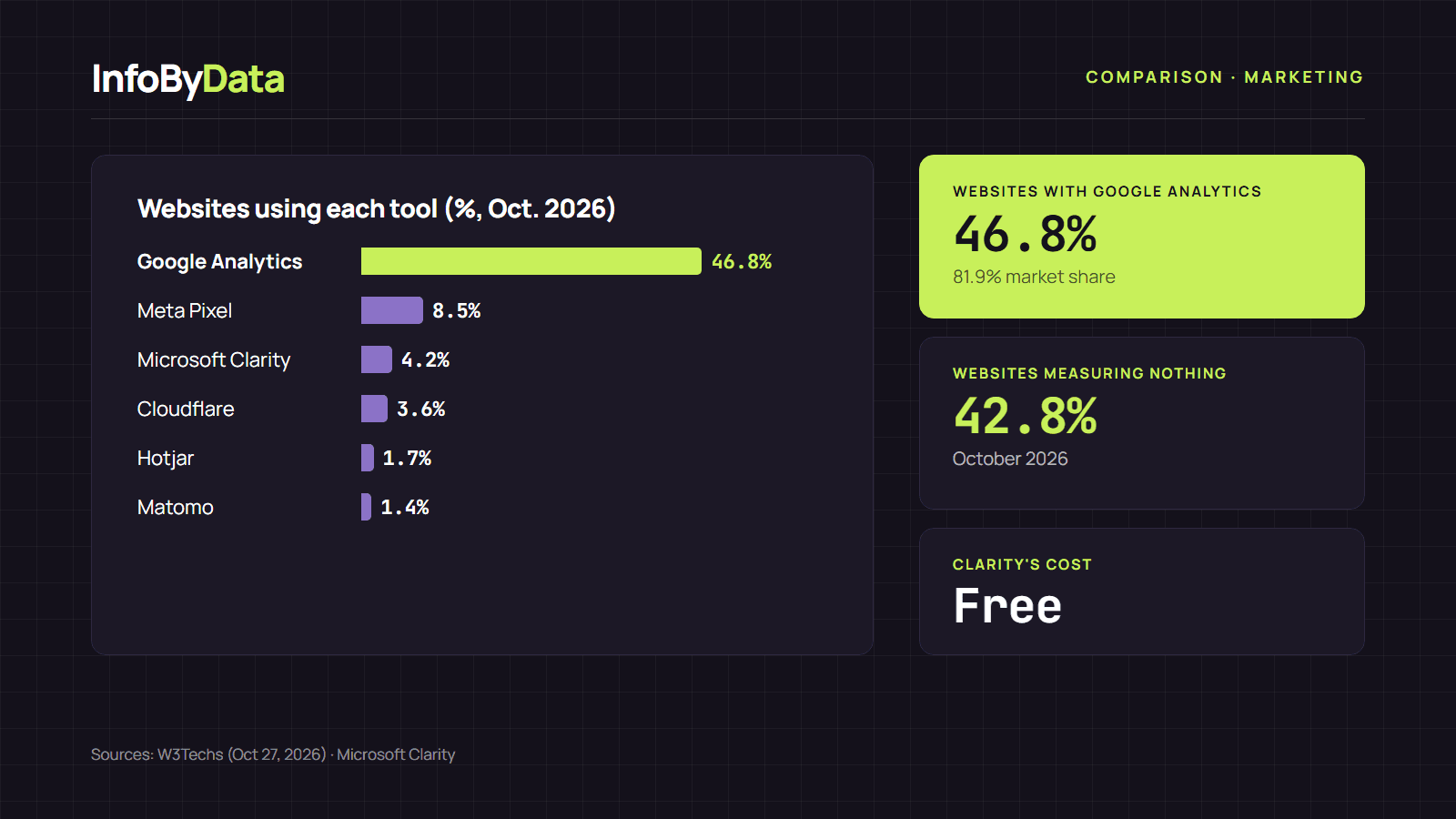
Google Analytics is installed on 46.8% of all websites in the world, according to W3Techs as of October 27, 2026. At the other extreme, 42.8% of websites use no analytics tool at all. Between those two groups lies the difference between marketing that measures its results and marketing that moves blindly. That is why choosing the right tools is the first step of data-driven marketing.
In this comparison we review the best data-driven tools for digital marketing by function, how widely they are used, what they cost and how to choose.
46.8%
Websites with Google Analytics
81.9% of the analytics market
42.8%
Websites with no tool
October 2026
8.5%
Websites with Meta Pixel
ad measurement
13.93%
EU companies using behavior-targeted ads
2024
Source: W3Techs, October 27, 2026; Eurostat, 2024
View the data as a table
| Websites with Google Analytics | 46.8% | 81.9% of the analytics market |
| Websites with no tool | 42.8% | October 2026 |
| Websites with Meta Pixel | 8.5% | ad measurement |
| EU companies using behavior-targeted ads | 13.93% | 2024 |
What data-driven tools for digital marketing are
Data-driven tools for digital marketing are those that measure what people do before and after seeing a campaign, so you can decide where to invest. They fall into five groups:
- Web analytics: how many visits arrive, from where and what they do.
- Search: how people find you on Google.
- Behavior: where users click and where they get stuck.
- Ad measurement: which campaigns generate sales.
- Dashboards: bring everything together in a single report.
The most used data-driven tools: the ranking
A single website can use several tools at once, so the percentages don't add up to 100. We go deeper into these figures in web analytics in numbers.
Comparison of the best data-driven tools for digital marketing
| Tool | What it is for | Cost |
|---|---|---|
| Google Analytics | Measuring visits, conversions and cross-channel attribution | Standard version is free |
| Google Search Console | Seeing searches, clicks and positions on Google | Free |
| Microsoft Clarity | Heatmaps and session recordings | Free, with no traffic limits |
| Data Studio (formerly Looker Studio) | Dashboards with data from several sources, with more than 1,300 Community Connectors | No charge |
| Meta Pixel and TikTok Pixel | Measuring ad conversions on those networks | Free (you pay for the ads) |
| Hotjar | Heatmaps and user surveys | Free plan and paid plans |
| HubSpot | CRM and marketing automation | Free plan and paid plans |
| Semrush and Ahrefs | Keyword and competitor analysis | Paid, with limited free versions |
For search competition, see our guide on how to use SEO tools to monitor the competition in Chile.
Data-driven tools for measuring advertising
In the European Union, 32.59% of companies paid for internet advertising in 2024, and 13.93% used ads targeted by users' activity or profile, according to Eurostat. To know which of those ads generates sales, you need an attribution tool.
Google Analytics offers a data-driven attribution model that splits the credit for each sale across channels according to their estimated contribution. We explain it in detail in our data-driven marketing guide.
How to choose your data-driven tools
- Start with the free ones: Google Analytics, Search Console and Clarity cover most of a small business's needs.
- Add one tool per need, not because it's trendy. If you don't know why people abandon their cart, use Clarity or Hotjar; if you don't know which ad sells, review attribution.
- Bring everything together in a dashboard with Data Studio, so the team sees the same data.
- Ask for consent: pixels and measurement cookies collect personal data. In Chile, Law 21,719 requires consent that is free, specific, unequivocal and informed.
To build the complete plan, follow our guide to developing a data-driven digital marketing strategy. And to see data platforms beyond marketing, check the most used data-driven platforms in data analysis.
What it means for you
- Measuring is already an advantage: 42.8% of websites use no analytics tool.
- The best data-driven tools to start with are free: Google Analytics, Search Console, Clarity and Data Studio cost nothing.
- More tools is not better: choose one for each business question and bring the data together in a single dashboard.
Sources
- data-driven
- data-driven tools
- digital marketing
- analytics tools
- marketing tools