AI search engines: which ones exist and how to appear in their answers
AI search engines answer with a summary instead of a list of links. How many people use ChatGPT, Gemini and AI Mode, and how to get your site in their answers.
· 2 min read
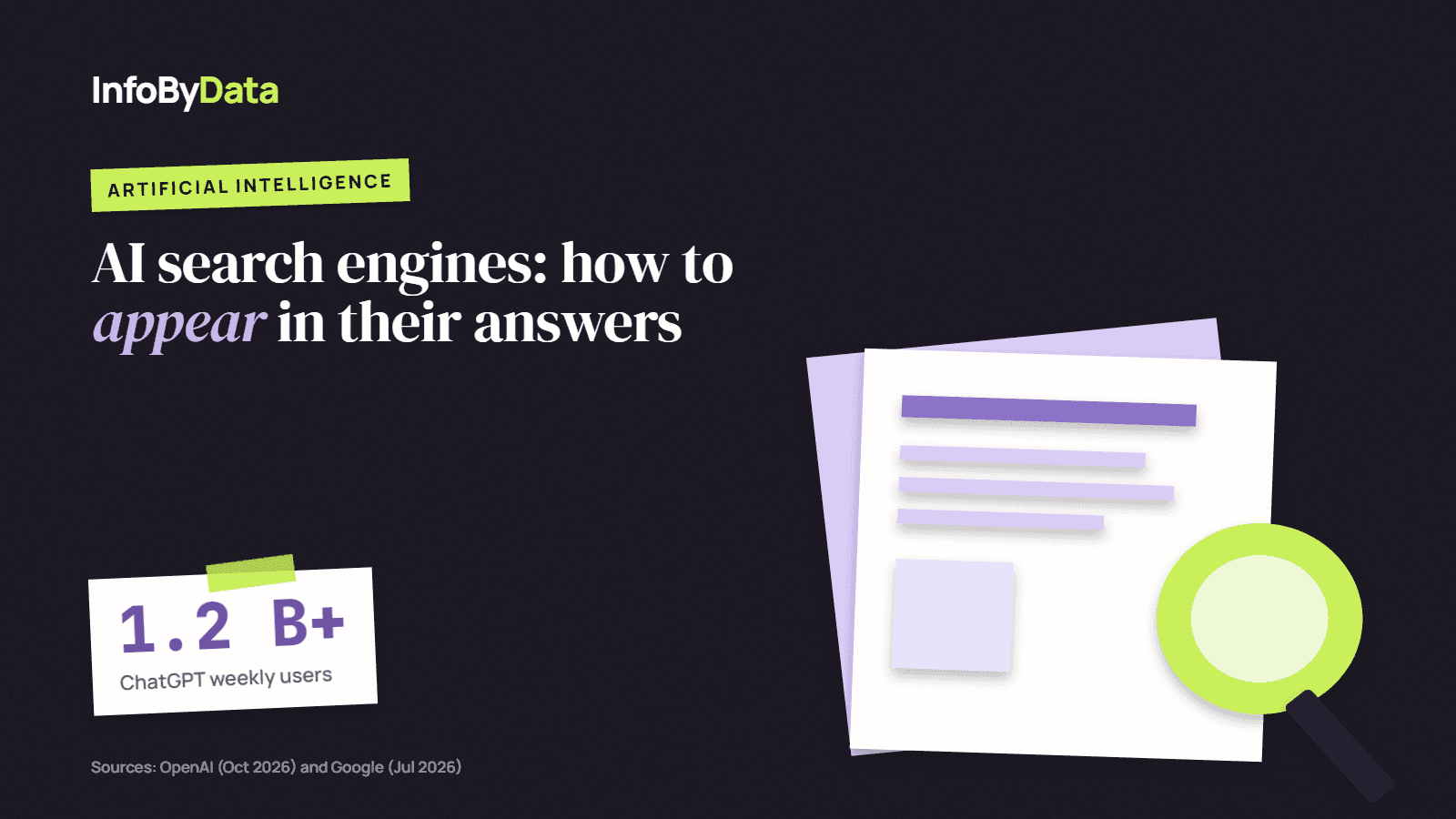
AI search engines have changed the way people search: instead of a list of links, they deliver a written answer that cites some sources. Their scale is already huge: ChatGPT has more than 1.2 billion weekly users, according to OpenAI, and Google reported that the Gemini app has 950 million monthly users and its AI Mode in Search more than 1 billion, according to its CEO's message of July 2026.
Which are the AI search engines
| Search engine | How it answers | Where it is used |
|---|---|---|
| ChatGPT | Conversation with web search and cited sources | OpenAI app and website |
| Google AI Mode and AI Overviews | Summary above the results or conversational mode inside Google | Google Search |
| Gemini | Google's conversational assistant with web access | Gemini app and website, Android |
| Perplexity | Answers with numbered citations to its sources | Perplexity app and website |
| Claude | Conversational assistant with web search | Anthropic app and website |
Why AI search engines matter for your site
When an AI search engine answers, fewer people click on the results. As we explain in our article on how much traffic Google's first result loses, the first link loses between 52% and 60% of its clicks when an AI summary appears. But brands cited inside the answer win back part of that traffic. So the goal is no longer just to rank first, but to be one of the answer's sources.
How to appear in their answers
- Let their robots in. Each company has different robots for search and for training its models. If your robots.txt file blocks them, your site cannot be cited.
- Make the content readable without JavaScript. Many AI robots read the HTML as it comes from the server.
- Answer concrete questions. Clear titles, direct answers at the start and data with sources.
- Show who writes and when. The author, the date and structured data help AI trust the source.
You can check these points in seconds with our free AI Checker: it analyzes which AI robots can access your site, whether the content is readable without JavaScript and whether it has an author, date and structured data. We explain its advantages in our article on the AI Checker.
What it means for you
- Your customers already ask AI search engines. With more than a billion users on each major platform, ignoring them means not being where decisions are made.
- Check whether your site is visible to AI. A robots.txt block or a site that only works with JavaScript can leave you out. Check it with the AI visibility checker.
- Write to answer. Clear content, with data and sources, is what both Google and AI assistants choose to cite.
Sources
- AI search engines
- ChatGPT
- Gemini
- Google AI Mode
- Perplexity
- AI visibility